


Maestro runs retentionfor Escentual.
Escentual handed three retention workflows to an AI CRM Manager. Maestro has since made 362,000 individual decisions across the catalogue, and each one is now worth 9.1x what it was at launch.
A catalogue where no two products are the same decision
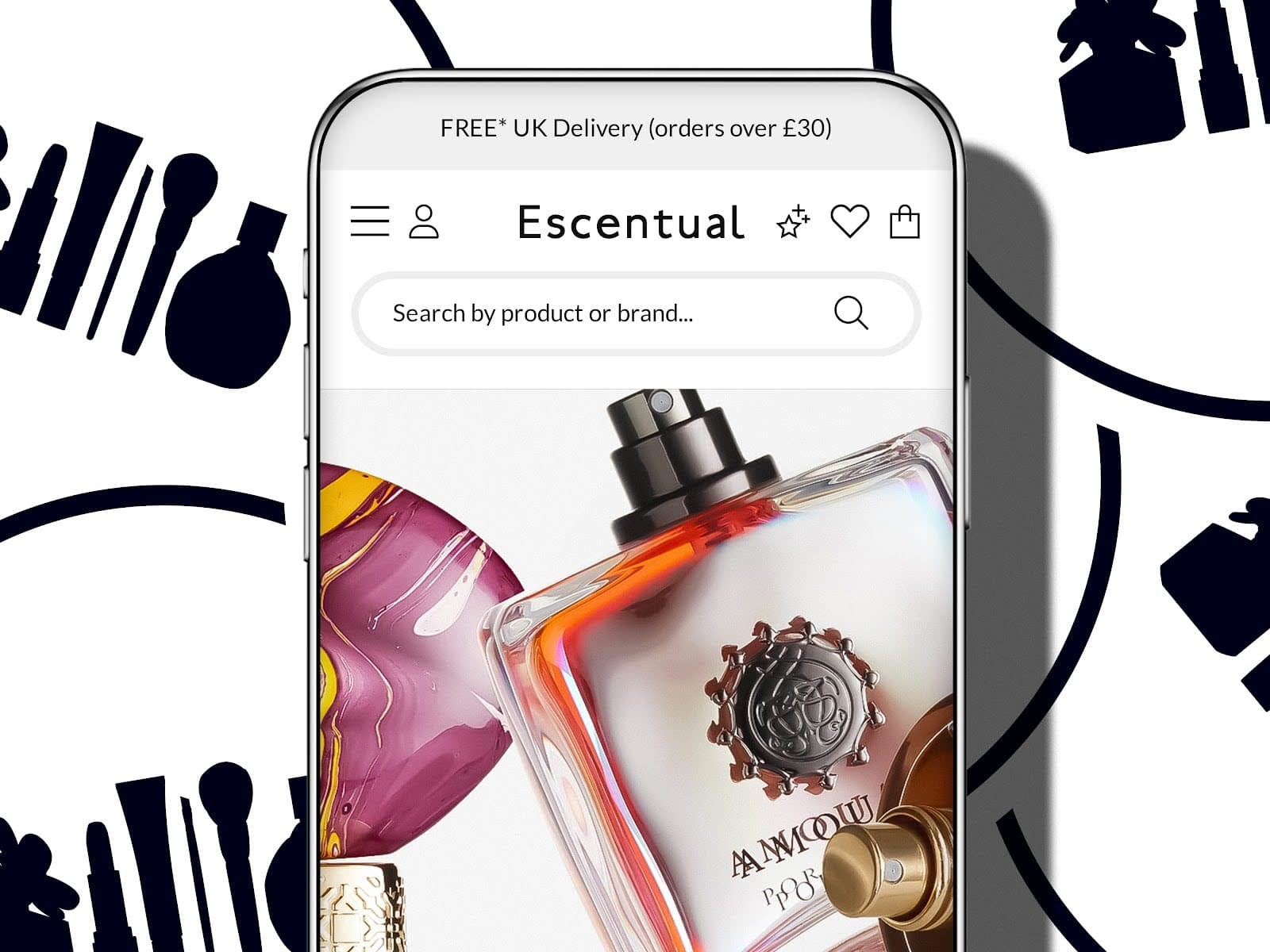
Escentual has spent decades building one of the UK's deepest premium beauty and fragrance catalogues. Tens of thousands of SKUs across skincare, fragrance, makeup, haircare and wellness, sold to a customer base that comes back rather than one that gets acquired.
That depth is the asset, and it is also the constraint. A 100ml eau de parfum, a nightly retinol serum and a refill sachet all behave differently: they run out on different clocks, they get replaced by different things, and they mean different things about the person who bought them. A campaign calendar cannot tell them apart. It fires on a date and hopes the date was right.
Escentual did not want more campaigns. They wanted the decision itself to be reasoned per customer rather than scheduled per segment: what to say, to whom, about which product, at which moment.
- One schedule, applied to a segment
- Timing set by a calendar, not consumption
- Product chosen by merchandising rule
- Every send needs a human to build it
- One decision, reasoned per customer
- Timing derived from how that SKU is actually used
- Product chosen by what the customer's routine needs next
- A system that decides without being briefed
Three workflows, handed over, not assisted.
Each one is a standing decision Escentual no longer makes. Maestro decides who, what, when and why, then executes through the Klaviyo stack Escentual already ran.
Replenishment
When a customer is close to running out, and which size or format they should come back to.
- Reasons on
- Consumption rate per SKU variant, not a fixed interval
Cross-Sell
Which product genuinely completes what the customer already owns, rather than what correlates in aggregate.
- Reasons on
- Routine composition and category adjacency
Substitute
What to offer instead when the exact product is gone, discontinued or no longer the right fit.
- Reasons on
- Formulation, concern and scent-family equivalence
Escentual owns the boundary. Maestro owns the decision inside it.
Exclusion rules, brand-partner constraints and the standards a premium retailer has to hold are set by Escentual and enforced on every decision before it leaves the system. Inside that envelope, nobody briefs Maestro, builds a journey, or approves a send. It reasons, it decides, it executes.
Escentual's team taught Maestro how to think about their business
A skill is how Maestro is taught to reason. Not a rule set and not a model setting, but a way of thinking, grounded in one retailer's commercial reality.
Escentual did not switch on a system that already understood premium beauty. Their merchandising and CRM leads sat with the reasoning itself: how this business actually makes money, what the strategy is asking for this year, the numbers the team is measured on, and where a premium retailer draws its lines. Product knowledge was the easy half.
Three skills were built out of that, specifically for Escentual. They carry the commercial reality, the strategy and the targets of the people who run the business, which is why Maestro's decisions look like Escentual's decisions rather than a generic retailer's.
You are not buying a generalist tool. You are hiring one, and then teaching it how your business thinks. Maestro learns from the people who own the strategy and answer for the numbers, and it decides the way they would.
Escentual's team
Merchandising and CRM leads set out how a decision should be made here: the commercial reality, what the strategy is pushing for, the targets they answer for, and where the line sits.
Built into a skill
That expertise is encoded as a way of reasoning rather than a segment or a rule branch, so it holds on the cases nobody wrote down and moves when the strategy moves.
Applied at Escentual's scale
Maestro reasons that way for every customer, on every decision, against the same targets the team is held to, without being briefed again.
The routine, not the last order
Reasons across the routine a customer is building, rather than the single product they bought most recently.
What genuinely substitutes
Reasons about equivalence: what truly stands in for something else at Escentual's standard, and what only looks similar.
Whether the moment is worth spending
Reasons about whether contact is warranted at all, given everything the customer has already been sent.
Maestro was not handed a product graph. It built one.
Nobody at Escentual sat down and mapped which serum belongs with which cleanser, which fragrance a customer graduates to, or which refill replaces which bottle. That map did not exist in any system. It lived, partially, in the heads of the people who buy the products.
Maestro derived it. More than 120,000 relationships between products, variants, routines and scent families, inferred from how customers actually behave across the catalogue and continuously re-scored as new behaviour arrives.
This is the asset the workflows run on. Replenishment knows what a refill is. Substitute knows what an equivalent is. Cross-Sell knows what completes a routine. All three read the same memory, so a decision made in one is consistent with a decision made in another.
Not sends, and not campaigns. A decision is the atomic unit of what Maestro does, and each one is resolved for one person.
Maestro did not make more decisions.
It made better ones.
Revenue per decision is the honest measure of whether a system is learning. Volume can be bought, because a system can always send more. Value per decision can only go up if the decisions themselves are improving.
Escentual's revenue per decision is 9.1x what it was when Maestro went live. The same act of one customer, one product, one moment now carries more than nine times the commercial weight it did at the start.
The mechanism is the loop. Every decision produces an outcome, and every outcome becomes the signal for the next decision. Memory deepens as more relationships are confirmed or rejected. The skills sharpen as more of Escentual's reality gets encoded. The workflows compound on each other, because they share one memory rather than four.
What a decision looks like
Every workflow resolves to something a customer actually receives. No campaign was built, no segment was drawn, and no one at Escentual chose the product or the moment.
Timed to the customer's own consumption cycle, at the variant they actually use.
The product that completes the routine already in progress, not the bestseller.
on the three workflows Maestro owns, earned on relevance, with no discount dependency.
“I am thoroughly impressed with Replenit for several reasons. Their alignment with our vision was immediately apparent, making the decision to work with them a natural choice. Particularly, their capability to handle complex data sets and develop customized solutions to meet our specific requirements has been outstanding.”

The same decision, on every surface.
Maestro already knows what each Escentual customer should see next. Today that decision reaches them in the inbox. Next, it reaches them on the page.
.png)
What Maestro knows about this customer
- Routine
- Retinol at night, four steps, built over 14 months
- Cycle
- Serum is roughly nine days from empty
- Constraint
- Reacts to fragrance, avoids essential oils
Why this one Retinol frequency went up last quarter and there is still no barrier step in the routine.
Same catalogue, same page. Different memory, so a different set of reasons.
Three workflows, owned end to end
Replenishment, Cross-Sell and Substitute run autonomously on one memory and three Escentual-specific skills, delivered through the Klaviyo stack Escentual already had.
Onsite Individualization
Maestro takes over onsite product recommendations. The same enriched, reasoned memory that decides the email decides the product grid, so the page a customer lands on is assembled from what Maestro already knows about them, not from what sold well last week.
One brain, one memory, and every surface Escentual owns reasoning from the same understanding of the customer.
An AI CRM Manager, running on your stack.
See what Maestro would decide for your customers, against your strategy and on the channels you already run.
Related case study: How L'Occitane lifted post-purchase revenue by 235%
CASE STUDIES

Mumzworld Unlocked 42X ROI with Replenit's AI Decision Engine

ebebek's Strategic AI Transformation with Decision Intelligence

L'Occitane Elevates Post-Purchase Revenue by 235%

Glosel Increase Marketing Automation Revenue by 53%

IBOOD, From Zero to 6.3% Revenue Share in 54-Day

Faith In Nature Drives 12.71% Total Revenue With Replenit

Ovabalance Grows Repeat Revenue 340% With Decision Engine

Farmex Achieves a 12X Conversion Boost With Replenit
